
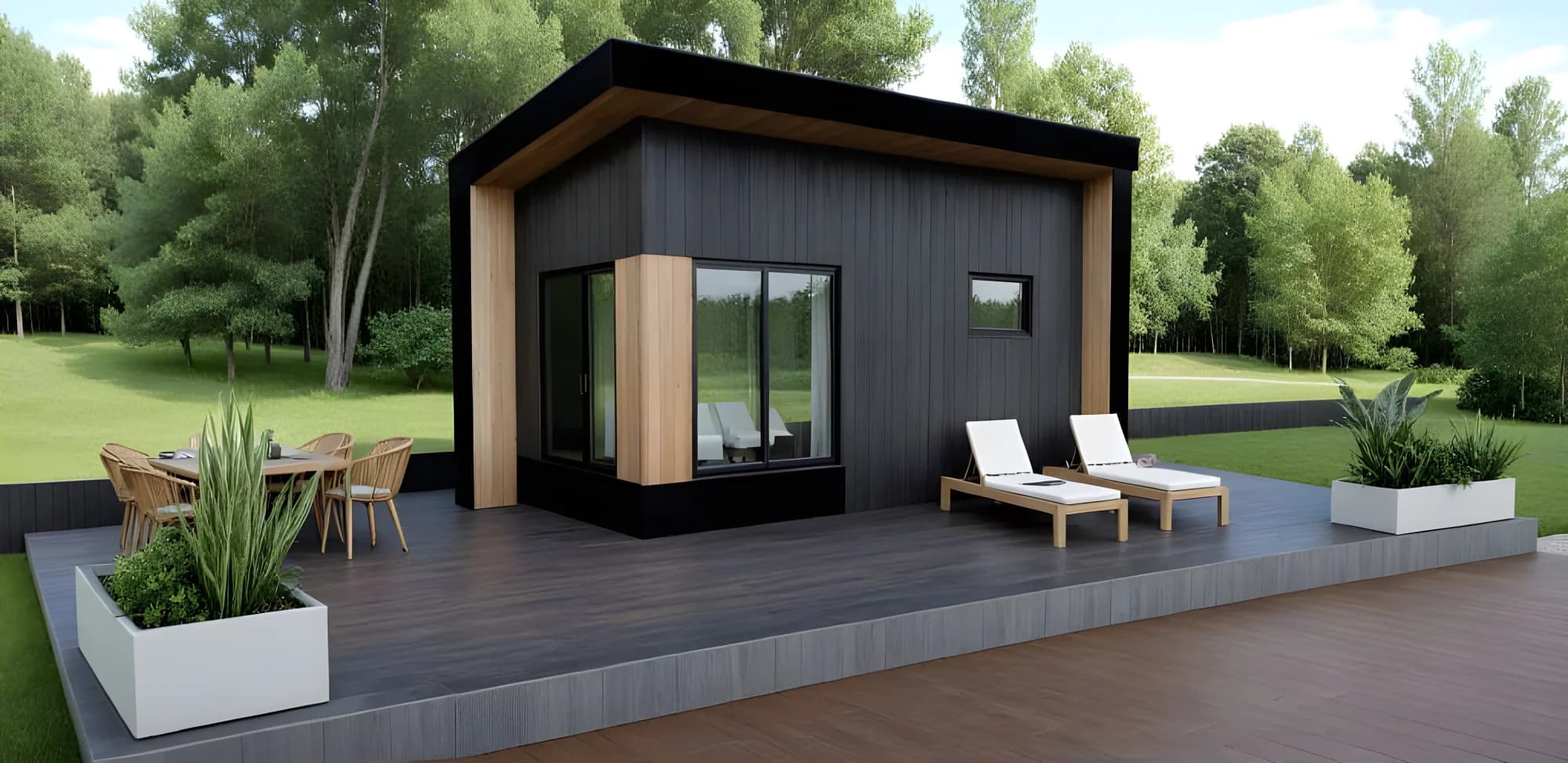
Home/Backyard Offices in Ontario
Also called a garden office, backyard studio, or bunkie
Backyard Offices in Ontario
A finished, factory-built room in your own backyard — for working, training, or hosting. Here's what one actually costs installed, when you need a permit, and what to ask before you buy a cheap one online.
A backyard office is a room — not a second home
A backyard office is a finished, insulated, powered structure in your yard that you work, train, or host in. You'll also hear it called a garden office, a backyard studio, a garden room, or — when it's for guests — a bunkie.
What it is not is a garden suite. That difference is the single most useful thing to understand before you spend anything, because it decides which set of rules you're in:
Backyard office (a room)
No kitchen. Nobody lives in it. Not a dwelling unit.
Governed by your municipality's accessory structure rules — setbacks, lot coverage, height — plus a building permit once it's over about 108 sq ft.
Garden suite / ADU (a home)
Kitchen, bathroom, sleeping space. Someone can live in it. You can rent it.
Governed by your municipality's ADU by-law — which can set a minimum floor area, servicing requirements, and far more. That's a different product →
If what you actually want is rental income, you want the second column, not the first — start with the ADU Checker to see what your lot allows.
Where the permit line falls
Ontario's Building Code generally doesn't require a building permit for a detached accessory structure under 10 m² — about 108 sq ft. That is why so many of the cheap units advertised online are sized just under it.
But that exemption is narrower than the marketing suggests, in three ways worth knowing before you buy:
1. Plumbing ends it. Put a bathroom or a sink in, and you're in permit territory regardless of size.
2. Zoning still applies. “No permit required” never means “no rules.” Setbacks, lot coverage and height limits apply to accessory structures whether or not a permit does — and a structure in the wrong place is a problem you may be made to fix.
3. Under 108 sq ft is genuinely small. It's roughly 10 × 10. Most people who want a real office end up above the line — and that is fine. It just means a permit is part of the project, and any supplier worth buying from will say so plainly.
One caveat we'll state rather than gloss: our municipal rule packs encode ADU standards, not accessory-structure standards. So we can tell you precisely what a dwelling can be on your lot, and we can tell you the right questions for a workspace — but for the accessory-structure setbacks on your specific property, your municipality's building department is the authority. We'll help you ask →
8 questions to ask before buying a backyard cabin online
There are a lot of very cheap backyard buildings for sale on Marketplace and overseas marketplaces right now. Some are fine. Some are a shed with a window. The listing usually won't tell you which — but these eight questions will, and they work on any supplier, including us.
Does it carry a CSA label — and can they show you?
Who pulls the building permit — and is it in the price?
Is the electrical ESA-certified for Ontario?
What is the effective R-value — not the nominal one?
Who honours the warranty, and are they reachable in Ontario?
How is it anchored, and what does it sit on?
Are delivery and crane included — and can a truck reach the spot?
What is the all-in installed price?
The short version: price is the least informative number in the listing. A unit that can't be permitted, insured or financed isn't cheap — it's a different product. Get the all-in installed figure and the certification answer in writing, from anyone, and the comparison makes itself.
Read the full checklist — with the installed-cost worksheet →
The Casa Duro Kubie 160
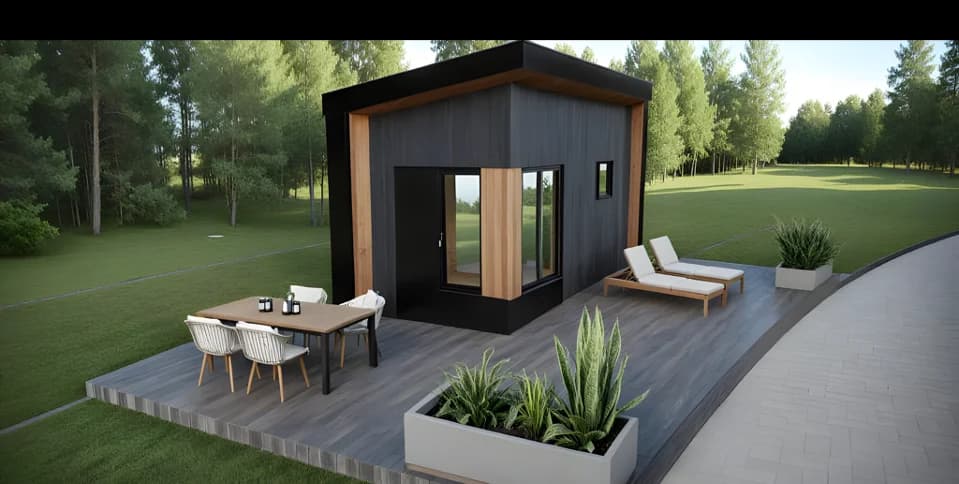
A 160 sq ft factory-built modular studio that arrives finished — charred-hemlock exterior, warm vaulted interior — and is set in under a day. Built as an office, studio, gym, or bunkie.
Basic shell from $55,000 — a fully finished interior with electrical, no bathroom or kitchenette. Full suite from $65,000 — adds a kitchenette and a 3-piece bath.
At 160 sq ft it is above the 108 sq ft line, so a building permit is required — we'd rather tell you that now than let you find out at the counter.
If you want something you can rent out
A workspace and a rentable suite are different purchases, and it's worth being deliberate about which one you're making. If the goal is income — or housing a parent or an adult kid — you want a garden suite: a full dwelling with a kitchen and bath, built and certified to that standard.
Our garden suite line-up starts at $96,244 and is CSA A277 certified — the factory certification Ontario municipalities rely on to permit a factory-built dwelling. See the ADU Series →
Whether your lot qualifies, and how big a suite it allows, is a by-law question with a real answer — we hold the ADU by-laws for 153 Ontario municipalities. Check your address →
Backyard offices in Ontario — FAQ
Do I need a building permit for a backyard office in Ontario?
Usually yes. Ontario's Building Code generally does not require a building permit for a detached accessory structure under 10 m² (about 108 sq ft), but that exemption is narrow — it does not apply once the building has plumbing, and your municipality's zoning rules for setbacks, lot coverage and height still apply even when a permit does not. Anything meaningfully larger than a garden shed, including a 160 sq ft studio, needs a permit.
What is the difference between a backyard office and a garden suite or ADU?
A garden suite (what by-laws call an ADU or ARU) is a second, self-contained dwelling — kitchen, bathroom, sleeping space — that someone can legally live in and you can rent out. A backyard office is not a dwelling: it is a finished room for working, exercising or hosting. That distinction drives everything else, because dwellings face far more rules: minimum floor areas, servicing, and certification requirements a workspace does not.
Can I put a bathroom in a backyard office?
Yes, and it is a common upgrade — but adding plumbing removes any small-structure permit exemption and brings in drainage and water connection requirements. It also starts moving the structure toward being treated as a dwelling unit in some municipalities. Worth deciding early, because it changes both the permit path and the price.
How much does a backyard office cost in Ontario?
A finished, factory-built studio starts around $55,000 for the unit itself. Beyond that, budget for delivery and placement, site preparation, an electrical hookup, permit fees and HST — these are real costs that advertised prices routinely leave out. Ask any supplier for an all-in installed figure rather than a unit price.
Are the cheap backyard cabins sold online legal in Ontario?
It depends entirely on certification and permitting, not on the price. Many are uncertified flat-pack or container structures that cannot be permitted as dwellings and may struggle to be permitted at all above the small-structure threshold. Some are perfectly serviceable as a shed. The problem is that the listing rarely tells you which one you are buying — so ask for the CSA label, the engineering, and who pulls the permit.
Can I run a business from a backyard office?
Usually yes for a home-based business, but your municipality's home-occupation rules govern things like client visits, signage, employees and parking. If clients will come to you, check those rules before you buy.
Can a backyard office become a rentable suite later?
Sometimes, but do not assume it. Converting a workspace into a legal dwelling means meeting your municipality's ADU rules — which can include a minimum floor area, servicing, and certification the original structure may not satisfy. If renting it out is part of the plan, check whether your lot qualifies for a garden suite first and build to that standard from the start.